 Vietnam Seaports Association

From May 11 to 15, 2026, a Vietnamese delegation, led by the leadership of the Vietnam Maritime and Waterway Administration (VIMAWA), and comprising representatives from the Vietnam Ports Association (VPA) and the Vietnam Maritime Corporation (VIMC), participated in the “Blueprint for a Maritime Nation 2026” forum in Perth, Western Australia.
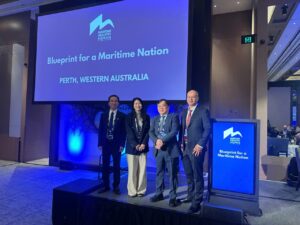
Discussions emphasized that the global maritime sector faces a “no single fuel solution” reality, requiring a multi-fuel pathway combined with pilot projects, green corridors, and digitalization to mitigate investment risks. The conference also highlighted key challenges, including green fuels costing 2 to 5 times more than conventional fuels, fragmented global policies, and infrastructure investment uncertainty. In Australia, practical approaches vary, with Western Australia focusing on ammonia for large bulk carriers, while Melbourne is developing methanol solutions for container shipping.
During the conference, forum sessions, and bilateral meetings, the Vietnamese delegation shared its experience in promoting green ports and energy transition, highlighting: Implementation of green port criteria and pilot projects at major ports; Integration of decarbonization into national development strategies; Ongoing development of legal frameworks and maritime emission standards.
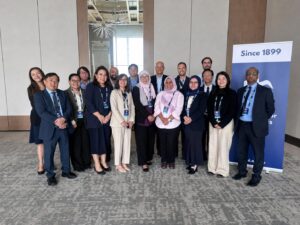
The Vietnamese delegation also proposed several practical and regionally collaborative initiatives: Accelerating the transition from research to pilot implementation, especially for green fuel and bunkering projects in the Cai Mep-Thi Vai area; Enhancing technical dialogue with Australia and regional partners on green corridors, fuel standards, MRV (measuring, reporting, and verification), and investment models; Prioritizing “no-regret actions” such as digitalization, energy efficiency, green port standards, and workforce training; Ensuring a just and feasible transition, with developing countries requiring support in finance, technology, and capacity building.
Vietnam also emphasized its potential to become a key node in the regional green maritime fuel supply chain, leveraging its strategic port system and strong trade growth.